Hose guide for hot, dry mines in Botswana
Heat, sun and sand shorten hose life on Kalahari mine sites. Practical checks for maintenance teams.
Kalahari conditions and what they mean for hose
Botswana's mines work in hot, dry, dusty conditions, many of them far from the nearest port. These are the conditions behind our quotations.
| Condition | What it does to hose | How we quote for it |
|---|---|---|
| Kalahari heat and sun | Covers age faster in high temperatures and UV | Hose with UV- and heat-resistant covers, routed away from hot spots |
| Fine Kalahari sand | Sand gets between hoses and wears covers | Spiral guards and sleeves at contact points |
| Deep pits and long ramps | Truck hoist and steering circuits run hot | Four-spiral hose and fire sleeves near engines |
| Landlocked supply route | Long road transit from Durban or Walvis Bay | Sealed cases per machine and complete documents for border crossings |
Heat and UV
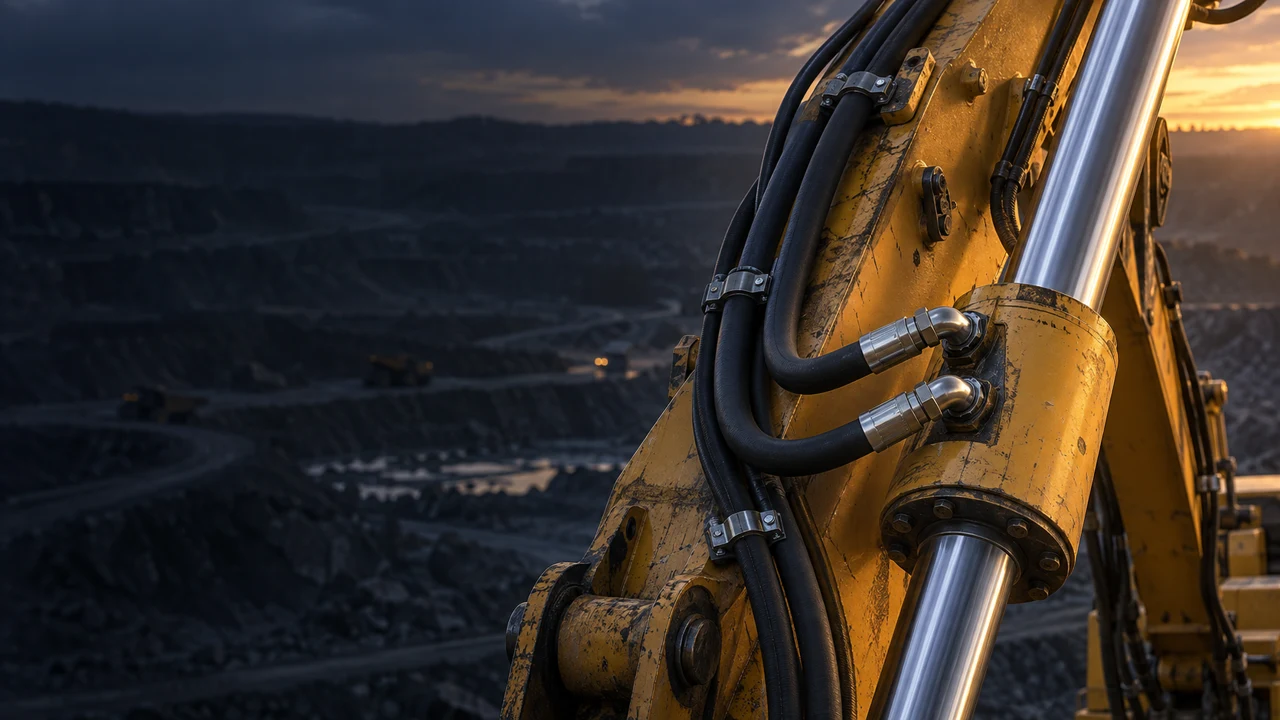
High ambient temperatures and strong sun age the rubber cover. Hoses near engines and exhausts run hotter still. Look for hardened, cracked covers, especially on the sunny side of the machine, and route hoses away from heat sources or add fire sleeves.
Sand and dust
Fine sand works its way between hoses and frames. Over time it wears the cover down to the wire. Spiral guards at contact points, correct clamping and regular cleaning extend hose life considerably.
Planning for a landlocked supply chain
Because every part comes by road from a coastal port, an unplanned failure can mean a long wait. Keep a small set of critical spares and replace main hoses by kit at planned shutdowns, ordering early enough to cover the road leg and the border.
Checklist for maintenance teams
- Check covers on the sunny side for cracking
- Look for sand wear at clamps and contact points
- Keep fire sleeves near engines and exhausts
- Hold critical spares on site
- Order kits early for the road leg